
Carpet vs Rug: 7 Key Differences and Which One to Choose
A rug is a movable floor covering placed over an existing floor, while a carpet is generally installed from wall to wall and fixed in place. This fundamental difference affects everything from cost and installation to cleaning, comfort, flexibility, and long-term maintenance.
When comparing carpet vs rug, the right choice depends on the room, your budget, whether you own or rent your property, and how frequently you want to change your interior design.
Rugs are commonly used in Dubai apartments and villas to add comfort, colour, and definition over tile, marble, vinyl, or wooden flooring. Carpets in Dubai are often selected for bedrooms, offices, hotels, corridors, and other spaces where continuous softness and sound insulation are priorities.
This guide explains the difference between a rug and a carpet, compares seven important factors, and provides practical recommendations for different rooms and property types in Dubai.
What Is a Rug?
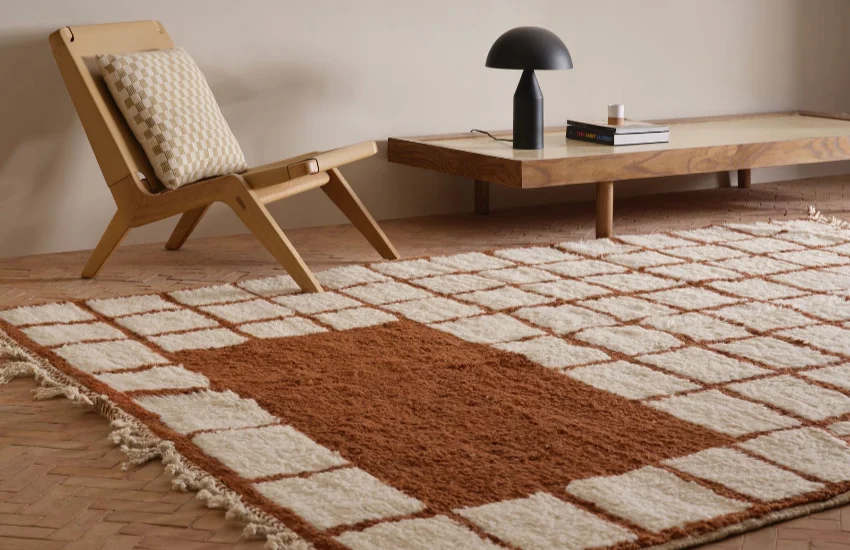
A rug is a textile floor covering that rests on top of an existing floor without being permanently attached to the subfloor. It can usually be moved, rolled, rotated, cleaned, stored, or replaced without making structural changes to the room.
Rugs are available in many sizes, from small 2 × 3 ft accent rugs to large 9 × 12 ft area rugs. Common options include:
- Area rugs
- Runner rugs
- Round rugs
- Flatweave rugs
- Outdoor rugs
- Handmade rugs
- Custom-made rugs
- Washable rugs
In Dubai homes, rugs are particularly popular because they add softness to cool tile or marble floors without requiring permanent installation. They can also help define separate areas in open-plan living and dining spaces.
Main Advantages of Rugs
- Easy to move, rotate, or replace
- No permanent installation required
- Suitable for rental apartments
- Available in numerous colours, patterns, and sizes
- Easier to remove for cleaning
- Useful for defining zones in open-plan rooms
- Can be layered over tile, vinyl, wood, or carpet
What Is a Carpet?
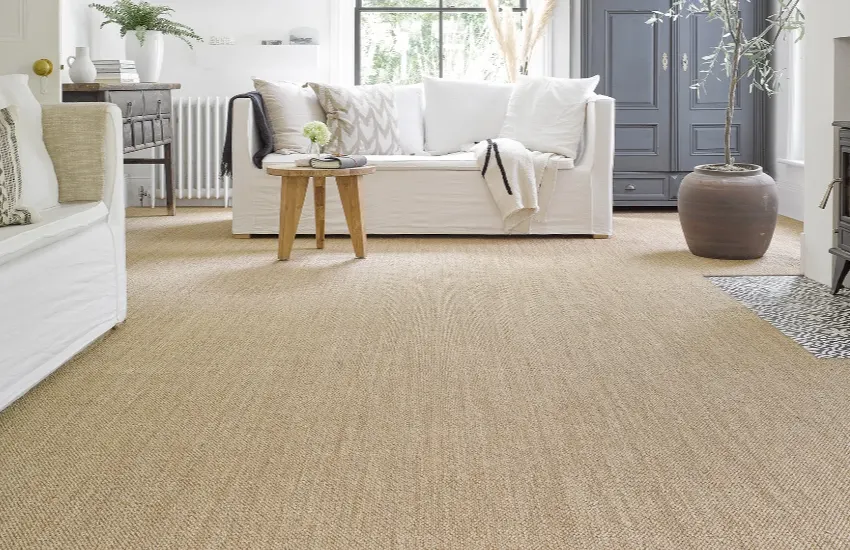
A carpet is a textile floor covering that normally extends across an entire room from wall to wall. It is professionally measured, cut, and secured using adhesive, gripper rods, tack strips, or another installation system.
Unlike rugs, carpets are generally priced by square metre or square foot rather than as individual pieces. They are commonly used in bedrooms, offices, hotels, cinemas, prayer areas, corridors, and villas where continuous floor coverage is required.
Wall-to-wall carpet creates a uniform appearance and provides consistent softness across the room. It may also reduce footsteps, echoes, and general noise, making it suitable for bedrooms, upper floors, meeting rooms, and hospitality spaces.
Main Advantages of Carpets
- Complete wall-to-wall floor coverage
- Consistent softness throughout the room
- Better overall sound absorption
- Strong thermal and acoustic insulation
- Suitable for large rooms and commercial spaces
- Creates a unified interior appearance
- Available in custom colours, piles, and materials
Carpet vs Rug: Quick Comparison
| Factor | Rug | Carpet |
| Coverage | Covers a selected section of the floor | Covers the complete room from wall to wall |
| Installation | Placed directly on the floor, often with a rug pad | Professionally measured, cut, and installed |
| Typical Cost | Approximately AED 200 to AED 5,000+ per piece | Approximately AED 40 to AED 150+ per sq. metre installed |
| Mobility | Easy to move, rotate, store, or replace | Fixed in place until professionally removed |
| Cleaning | Can be vacuumed, shaken, washed, or removed for cleaning | Requires regular vacuuming and periodic deep cleaning |
| Lifespan | Around 5 to 15 years, depending on material and use | Around 8 to 20 years with suitable maintenance |
| Best For | Apartments, flexible interiors, and defined areas | Bedrooms, offices, hotels, and full-room comfort |
7 Key Differences Between a Rug and a Carpet
1. Size and Floor Coverage
The most obvious difference between a rug and a carpet is the amount of floor each one covers.
A rug normally covers only part of a room. It may be placed beneath a sofa, dining table, bed, coffee table, or seating arrangement. Rugs can also be used in hallways, entrances, kitchens, balconies, and other selected areas.
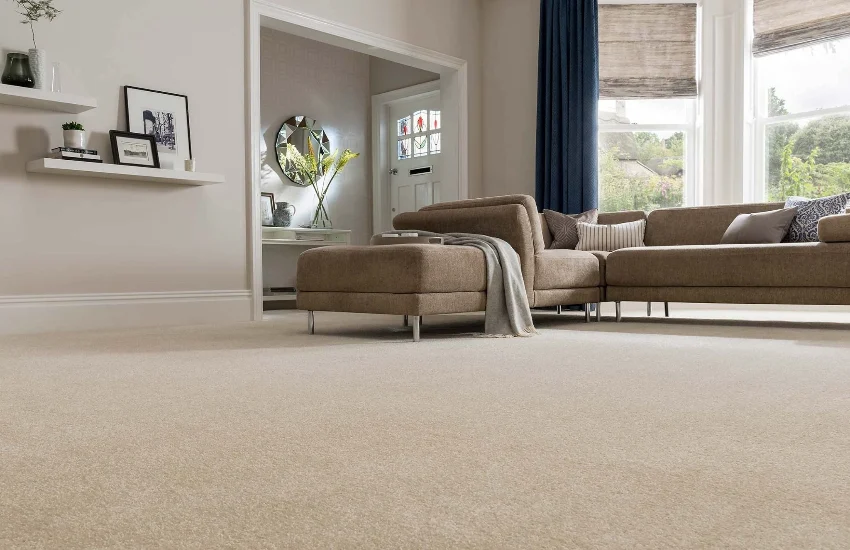
Carpet, by comparison, is cut to fit the complete dimensions of a room. It usually extends from one wall to another, leaving little or none of the original flooring visible.
Choose carpet when you want one continuous soft surface across an entire bedroom, office, corridor, or hotel room. Choose a rug when you want to highlight a particular area without covering the complete floor.
2. Installation Requirements
Rugs require little or no professional installation. A rug can be positioned directly over the existing floor and adjusted whenever necessary.
A non-slip rug pad may be placed underneath to improve grip, protect the flooring, and prevent the rug from moving or curling at the edges.
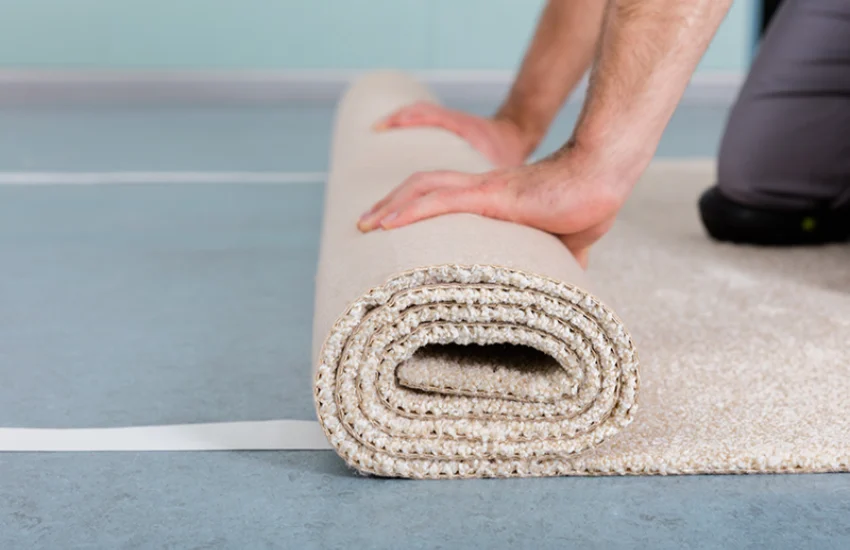
Wall-to-wall carpet requires a more detailed installation process. The room must be measured accurately before the carpet is cut, joined, stretched, and secured. Underlay may also be installed underneath to improve comfort, insulation, and durability.
Carpet installation is generally best handled by experienced installers, particularly in large rooms, rooms with irregular layouts, staircases, or commercial spaces.
3. Cost
Rugs are normally purchased as complete pieces, while carpets are priced according to the total floor area.
The price of a rug depends on its size, material, construction, pattern, brand, and whether it is machine-made or handmade. A small synthetic rug may be relatively affordable, while a large wool, Persian, or custom-made rug can cost considerably more.
Carpet costs are calculated by square metre and may include underlay, adhesive, fitting, floor preparation, delivery, and installation.
A rug may have a lower initial cost when you only need to cover one section of a room. However, wall-to-wall carpet may provide better value per square metre when covering a large bedroom, office, hotel corridor, or commercial area.
Always compare the complete project cost rather than only the material price.
4. Mobility and Flexibility
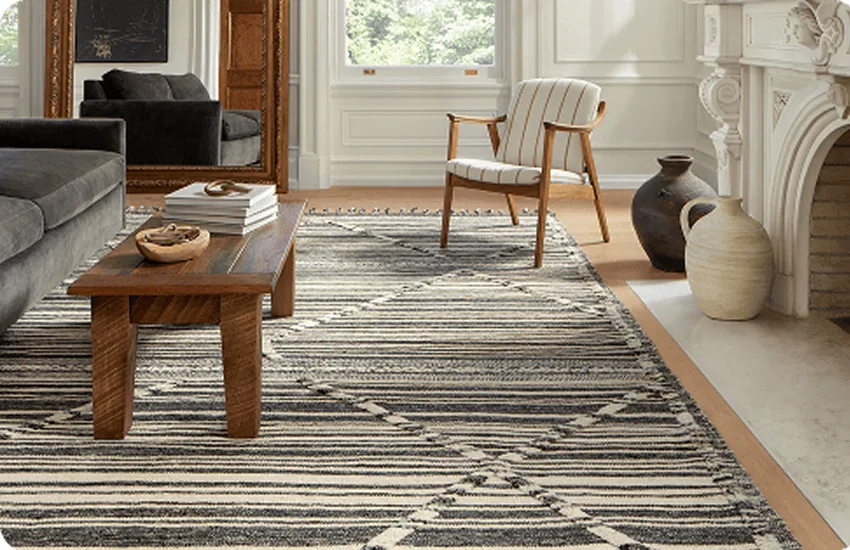
Rugs provide significantly more flexibility than carpets.
You can move a rug from one room to another, rotate it to distribute wear, store it temporarily, or replace it when you update your interior design. You can also take it with you when moving to another property.
This makes rugs especially practical for tenants, furnished apartments, seasonal interior updates, and people who redecorate frequently.
Carpets remain fixed in place until they are removed. Changing an installed carpet usually involves labour, disposal, surface preparation, and a new installation.
For Dubai residents who relocate frequently or live in rental properties, rugs are often the more convenient option.

5. Cleaning and Maintenance
Both rugs and carpets require regular maintenance, but the cleaning process is different.
Most rugs can be vacuumed normally. Smaller rugs may also be shaken outdoors, spot-cleaned, professionally washed, or placed in a washing machine when the care label allows it.
Because rugs are removable, the floor underneath can also be cleaned more easily.
Wall-to-wall carpet cannot be removed for routine cleaning. Dust, sand, hair, and debris may settle deeper into the carpet pile, particularly in busy hallways, offices, and family living spaces.
Regular vacuuming is important, while professional deep cleaning may be required periodically to remove embedded dirt, stains, and odours.
In Dubai’s dusty environment, low-pile and easy-clean floor coverings are generally easier to maintain than thick, high-pile options.

6. Comfort, Sound and Insulation
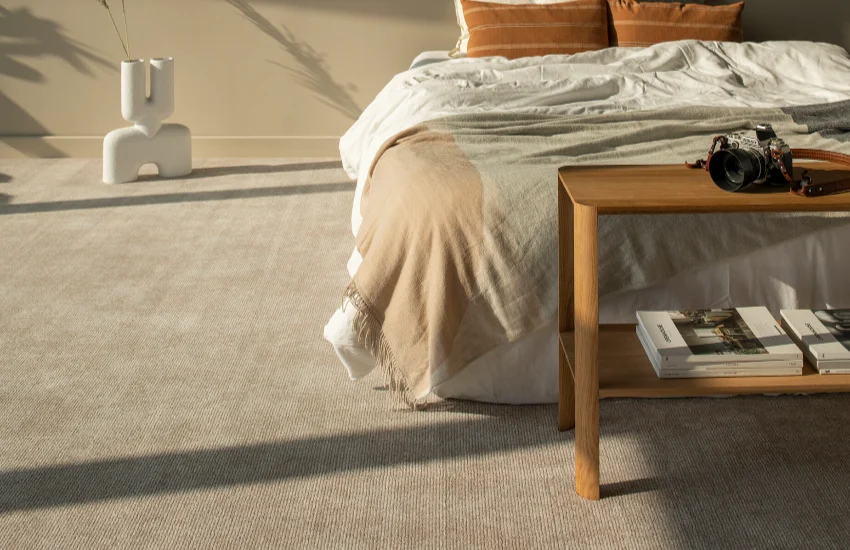
Carpet provides consistent softness across the complete floor. It can make bedrooms, hotel rooms, offices, and upstairs spaces feel quieter and more comfortable.
Because the entire surface is covered, carpet may reduce footsteps, echoes, furniture movement, and sound transmission more effectively than a small rug.
Rugs provide comfort only in the areas where they are placed. However, a large area rug beneath a sofa or bed can still make a noticeable difference, particularly over marble, tile, or other hard flooring.
For a bedroom where you want softness from the bed to the wardrobe, carpet may be the better choice. For a tiled living room where comfort is only needed around the seating area, a large rug may be sufficient.
7. Design Flexibility and Property Considerations
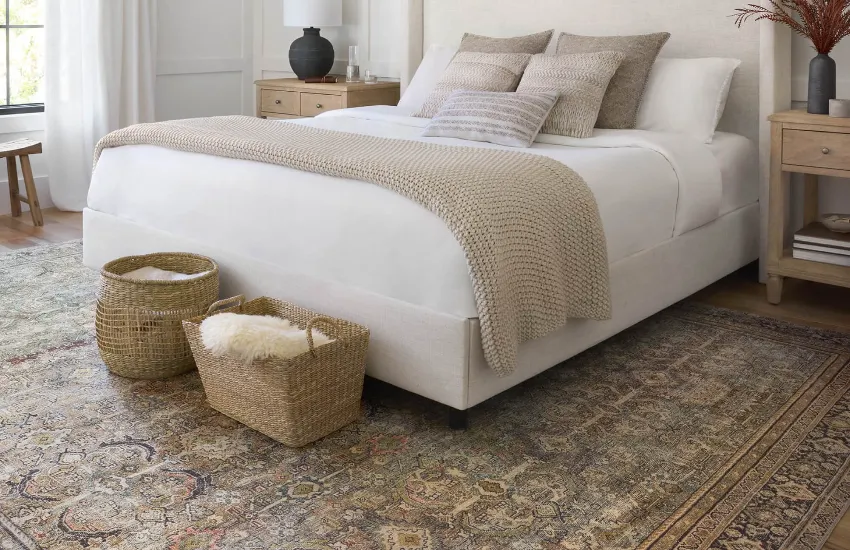
Rugs make it easier to change the appearance of a room without renovating it.
You can update the colour, pattern, texture, or size whenever your furniture or preferences change. Rugs can also introduce a statement design while allowing the original flooring to remain visible.
Carpet creates a more permanent design commitment. Once installed, the room will normally retain the same colour and texture for several years.
In rental apartments in areas such as Dubai Marina, Jumeirah Village Circle, Business Bay, or Downtown Dubai, rugs are often more practical because they do not permanently alter the property.
In an owned villa, hotel, office, or purpose-designed bedroom, carpet may provide a more complete and integrated finish.
Rug vs Carpet: Which Is Better?
Neither option is universally better. The right choice depends on the room, property type, maintenance expectations, budget, and desired appearance.
| Situation | Recommended Option | Reason |
| Rental apartment | Rug | Requires no permanent installation and can move with you |
| Master bedroom in an owned villa | Carpet | Provides complete softness, warmth, and sound reduction |
| Open-plan living and dining room | Large area rug | Defines individual zones without covering the entire floor |
| Office corridor | Carpet | Offers uniform coverage and helps reduce footsteps and noise |
| Balcony or patio | Outdoor rug | Designed for outdoor conditions and easier to replace |
| Frequently updated interior | Rug | Patterns and colours can be changed without renovation |
| Hotel or hospitality property | Carpet | Creates a consistent look across rooms and corridors |
| Children’s play area | Rug | Can be removed, cleaned, or replaced more easily |
| Home cinema | Carpet | Helps absorb sound and reduce echo |
| Formal living room | Area rug | Adds a focal point while preserving visible flooring |
Area Rug vs Rug: Is There a Difference?
An area rug is a specific type of rug designed to cover a defined section of a room.
The word “rug” is the broad category. It includes area rugs, runners, round rugs, accent rugs, prayer rugs, outdoor rugs, and other movable textile floor coverings.
An area rug is generally larger than an accent rug or mat. Common sizes include:
- 5 × 8 ft
- 6 × 9 ft
- 8 × 10 ft
- 9 × 12 ft
Area rugs are often placed beneath living-room furniture, dining tables, beds, or central seating arrangements.
All area rugs are rugs, but not every rug is an area rug. A narrow hallway runner, small bedside rug, or round rug still belongs to the rug category but may not be described as an area rug.
Rug vs Mat: What Is the Difference?
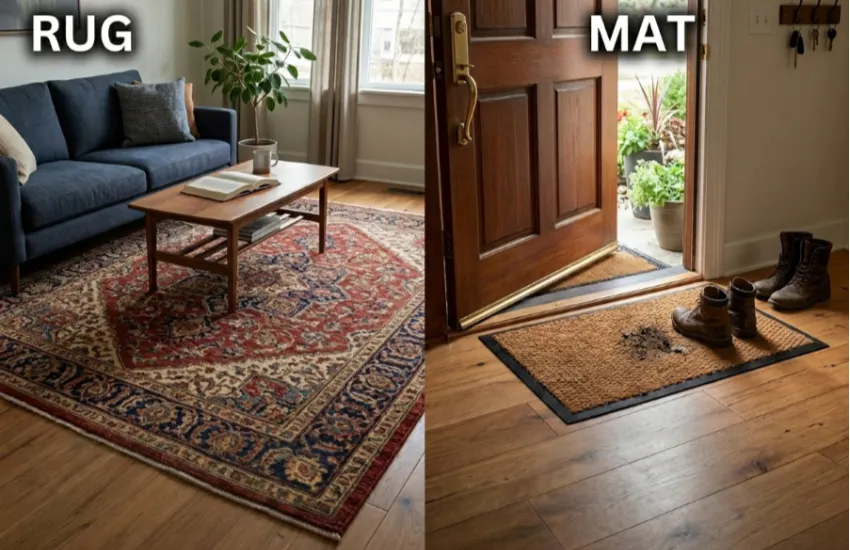
A rug is primarily used for decoration, comfort, and room definition. A mat is usually smaller and designed for a practical purpose.
Mats are commonly placed near doors, kitchen counters, bathrooms, gym equipment, or other areas where grip, moisture control, or floor protection is required.
| Feature | Rug | Mat |
| Main Purpose | Comfort and decoration | Grip, cleanliness, or moisture control |
| Typical Placement | Living rooms, bedrooms, dining rooms | Entrances, bathrooms, kitchens |
| Size | Small to room-size | Usually small |
| Design Role | Important part of the interior | Primarily functional |
| Materials | Wool, cotton, polypropylene, nylon and blends | Rubber, coir, microfibre and synthetic materials |
A simple way to remember the difference is: use a mat for functional protection and a rug for comfort and interior design.
Best Rug and Carpet Options for Dubai Homes
Low-pile, breathable, and easy-to-clean floor coverings are practical for Dubai’s climate and indoor living conditions.
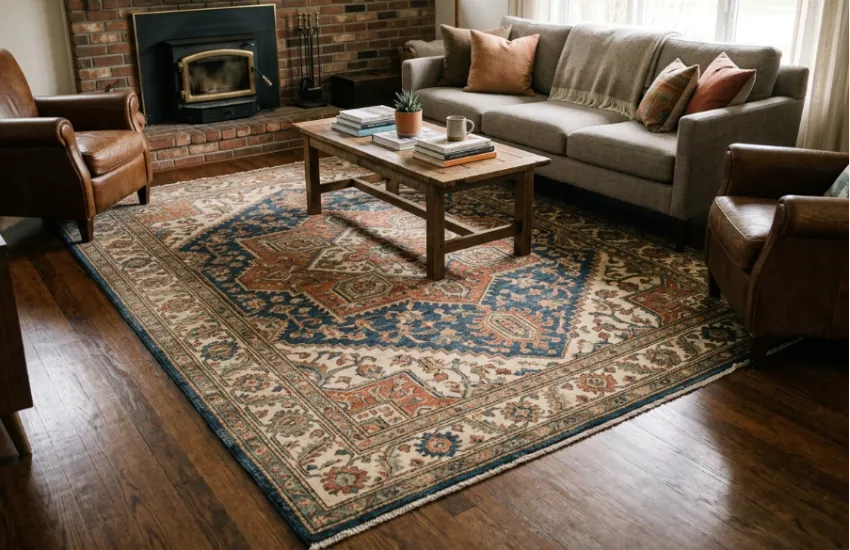
Many Dubai properties have tile, marble, vinyl, or wooden floors. Rugs can add comfort to these surfaces without hiding the complete floor. Wall-to-wall carpet is more commonly used where continuous softness, quieter interiors, or additional insulation is required.
Suitable Rug Materials
Polypropylene
Polypropylene rugs are generally affordable, stain-resistant, and easy to maintain. They are suitable for busy family areas, children’s rooms, and some outdoor spaces.
Wool
Wool rugs provide softness, durability, and a premium appearance. They work well in formal living rooms, bedrooms, and low-to-medium traffic areas.
Cotton
Cotton rugs are lightweight and often easier to move or wash. Flatweave cotton rugs are suitable for casual interiors and smaller spaces.
Nylon
Nylon provides good resilience and is suitable for areas that experience regular foot traffic.
Suitable Carpet Options
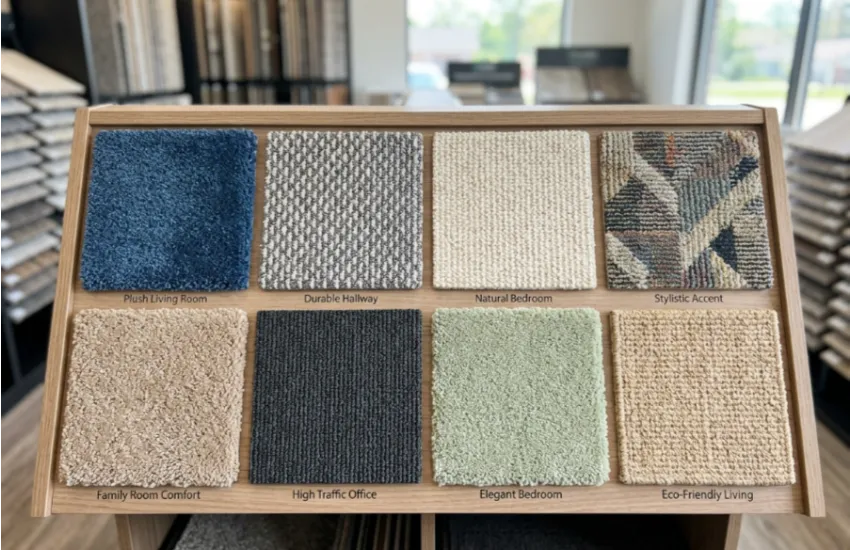
Low-Pile Carpet
Low-pile carpet is easier to vacuum and may collect less visible debris than thick, high-pile carpet. It is suitable for bedrooms, offices, and corridors.
Nylon Carpet
Nylon carpet is durable and performs well in high-traffic residential and commercial areas.
Polypropylene Carpet
Polypropylene carpet is generally economical and resistant to many common stains.
Wool-Blend Carpet
Wool-blend carpet combines a soft, premium finish with improved practicality and durability.
Can You Put a Rug Over Carpet?
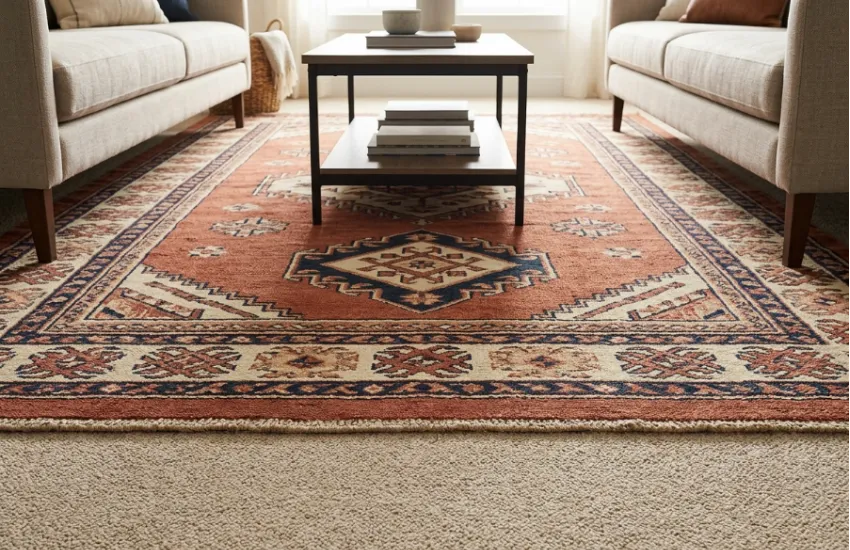
Yes, a rug can be placed over wall-to-wall carpet.
Layering a rug over carpet can introduce colour, pattern, and texture while protecting high-traffic areas. It can also help define a seating area, reading corner, or space beneath a dining table.
However, the rug should be secured properly to prevent movement, bunching, or curled edges. A rug pad designed specifically for carpeted floors can help keep it stable.
Low-pile rugs generally work better over carpet than very thick or flexible rugs.
Frequently Asked Questions
What Is the Main Difference Between a Rug and a Carpet?
A rug covers only part of a floor and can normally be moved. A carpet usually covers an entire room from wall to wall and is fixed in place.
Size, coverage, and installation are the clearest differences between the two.
Is an Area Rug the Same as a Carpet?
No. An area rug is a movable floor covering placed over an existing surface. Carpet is usually measured, cut, and installed across the complete room.
Which Is Cheaper: A Rug or Carpet?
A rug is often cheaper when covering only one section of a room. Carpet may offer better value per square metre when complete floor coverage is required.
The final price depends on the material, size, quality, installation, underlay, and floor preparation.
Are Rugs Better Than Carpets for Dubai Apartments?
Rugs are often more practical for Dubai apartments because they require no permanent installation, can be removed for cleaning, and can move with the tenant.
However, carpet may be more suitable for owned apartments where full-room comfort and sound reduction are priorities.
Is Carpet Better for Bedrooms?
Carpet can be an excellent bedroom option because it provides consistent softness, warmth, and sound absorption across the full room.
A large rug may be preferable when you want to preserve the existing flooring while adding comfort around the bed.
Can You Put a Rug on Tile or Marble?
Yes. Rugs are commonly placed over tile and marble flooring in Dubai homes.
A non-slip rug pad should be used to prevent movement and protect the floor underneath.
Can You Place a Rug Over Wall-to-Wall Carpet?
Yes. A rug can be layered over carpet to add pattern, protect busy areas, or define a particular zone.
Use a suitable rug pad to reduce movement and prevent the edges from curling.
Are Persian Rugs and Oriental Rugs the Same?
Persian rugs are a category of rugs traditionally produced in Iran, historically known as Persia.
“Oriental rug” is a broader market term used for rugs produced across different parts of Asia and the Middle East, including Persian, Turkish, Afghan, Pakistani, Indian, and other regional styles.
Key Takeaways
- A rug is movable and normally covers only part of a floor.
- Carpet is generally installed from wall to wall.
- Rugs provide more design flexibility and are suitable for rental properties.
- Carpet provides consistent softness, insulation, and sound reduction.
- Rugs are easier to remove, rotate, and clean separately.
- Carpets require professional measurement and installation.
- Large area rugs work well in open-plan living and dining spaces.
- Low-pile rugs and carpets are practical for Dubai’s dusty environment.
- The right choice depends on the room, property type, budget, and maintenance requirements.
Find Rugs and Carpets in Dubai
Rug Dubai provides floor-covering options for apartments, villas, offices, hotels, and commercial properties throughout Dubai.
Explore the following collections:
- Rugs: https://rugdubai.com/product-category/rugs/
- Carpets: https://rugdubai.com/product-category/carpets/
- Outdoor Rugs: https://rugdubai.com/outdoor-rugs/
- Custom-Made Rugs: https://rugdubai.com/custom-made-rugs/
Visit https://rugdubai.com/ or call +971 50 637 9229 for product recommendations and a free consultation.
